


Chimney Repairs in Atherton
Chimney stacks repointed, rebuilt and flashed in, so the damp patches on the chimney breast stop coming back. A short drive east of Hindley Green.
Chimney Repairs for Homes in Atherton
The terraced streets in Atherton carry some of the densest chimney lines around, one tall stack after another running the length of the ridge. After decades up in the weather the mortar joints wash out, the flaunching that beds the pots cracks and the lead flashing at the base gives up, and any of the three will put a damp patch on a bedroom wall. We repoint the brickwork, renew the flaunching and cut in fresh lead so the stack throws water off again.
We cover Atherton and the surrounding area: Chowbent, Bag Lane, Market Street, Hindsford, Howe Bridge and beyond (M46).
Get a Free Atherton Quote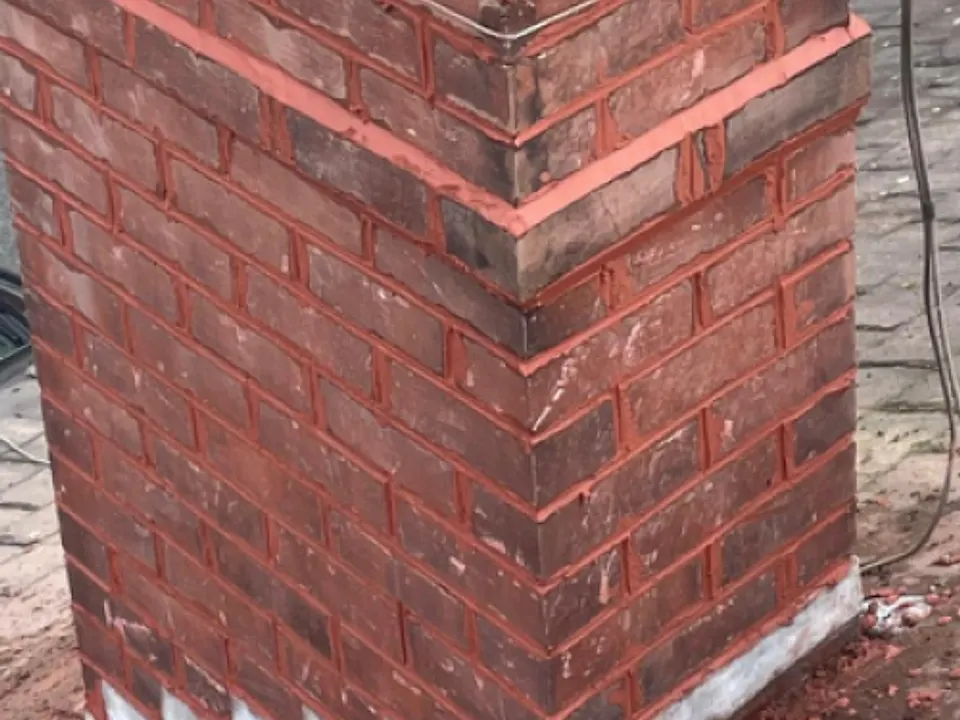
What’s Included
On a terrace the stacks sit close together along the ridge, so it often makes sense to see to more than one while the access is there, before the next winter finds the weak joint. Where a chimney is no longer in use, we can take it down to below the roofline and tile over the gap so it stops being something to maintain. Either way we handle the brickwork, the lead and the slate around it ourselves, and it comes on a single written quote.
- Stacks repointed with the right mortar mix
- Full and partial chimney rebuilds to match the house
- Lead flashing and soakers renewed, dressed into the joints
- Flaunching recast, pots reset, cowls and caps fitted
- Disused chimneys removed and tiled over
- Leaks at the chimney traced and stopped for good
How It Works
Chimney Repairs in Atherton, FAQs
On the town terraces it tends to be tired pointing, a cracked flaunching or perished lead at the base of the stack, letting water in so it runs down the flue and into the plaster. We look at all three and fix whichever has failed, instead of guessing which one it is.
Yes, and on the Atherton terraces that is usually the sensible way. With the scaffold up we can repoint the stack, renew the flashing and put right the slates and ridge around it in one visit, all on the same written quote, rather than sending different trades back and forth.
From the ground, look for gaps and shadows in the mortar joints, white staining, or a stack that reads crooked against the sky. Inside, damp patches on the chimney breast are the big tell. Binoculars from the garden will tell you a lot, and we will confirm it up close from a ladder or scaffold.
It can be. Stacks lean when the mortar on the weather side wears faster, and a badly leaning stack in wind is a genuine risk to whatever is below. If yours has a visible lean, get it looked at soon. Making it safe is quick; rebuilding it is planned work, not an emergency, if caught early.
Usually the lead. Flashing that has split, lifted or been bodged with mastic lets water straight in at the joint between stack and roof. Cracked flaunching on top does the same. Both are standard fixes for us, and we check all three, the pointing, the flaunching and the lead, whenever we look at a leaking chimney.