


New Roofs in Standish
Full re-roofs with nothing skipped: stripped to the timbers, new membrane and battens, tiles or slates laid straight, dry ridge as standard. North of Wigan, a short drive from us.
New Roofs for Homes in Standish
A re-roof on a larger Standish detached is a bigger undertaking than a standard semi, and we price it for what it is. There is more roof to strip, more hip and valley detail to rebuild, and often dormers to work around, so we plan the scaffold and the sequence in advance. Everything goes back with a breathable membrane, new treated battens and a dry ridge and dry verge system, so there is no mortar sitting up there waiting to crack and drop out.
We cover Standish and the surrounding area: Almond Brook, Rectory Lane, Church Street, Market Place, Standish Lower Ground and beyond (WN6).
Get a Free Standish Quote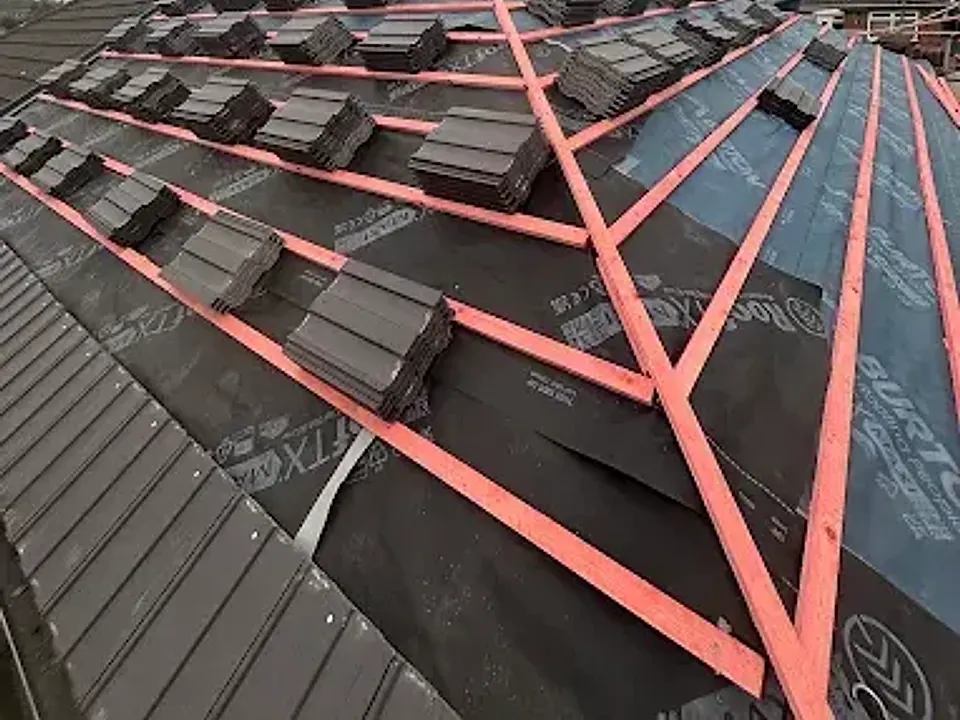
What’s Included
In the conservation core the look matters as much as the watertightness, so we match the slate or tile and the detailing to what is already there, sourcing reclaimed material where an exact match is needed. On the newer executive estates a full re-roof is less common yet, but where an original covering has been let down by poor detailing we put the whole system right. Either way you get a price for the re-roof and, where repair is a real option, a price for that too, so you decide on the real numbers.
- Stripped to the rafters, timbers checked and repaired
- Breathable membrane and treated battens throughout
- Concrete tile, clay tile, natural or fibre cement slate
- Dry ridge and dry verge systems as standard
- New lead flashings, chimney work while the scaffold is up
- Waste cleared daily, site left tidy
How It Works
New Roofs in Standish, FAQs
We plan it out first. A larger roof with hips, valleys and dormers needs the right scaffold and a sensible order of work, and we talk you through the timescale up front. Kept dry and tidy each day it is very manageable, it just takes longer than a small roof.
It will if it is matched. In the conservation core we take care to match slate or tile and the ridge and verge detail so a re-roofed house sits right among its neighbours rather than looking new and out of place.
The felt is usually the decider. If the membrane under the tiles has gone brittle and torn across large areas, every repair is temporary because water finds the next tear. Widespread nail failure and constant slipped tiles point the same way. We will tell you straight which category your roof is in, and quote a repair instead if that is the better call.
Ridge and hip tiles were traditionally bedded on mortar, which cracks with the seasons and eventually lets tiles come loose. A dry ridge system clamps them mechanically with screws and brackets, allows the roof to breathe, and does not need rebedding every few years. It costs a little more on day one and saves money every year after.
It comes down to the house, the street and the budget. Natural slate looks superb on older houses and lasts generations; fibre cement slate gives a similar look for less; concrete tiles are the workhorse choice. We bring samples and give you prices for each so you can compare them side by side.